Haku Sports
2026
Simplifying event-day operations for staff and volunteers
The Challenge
Event staff needed better visibility into attendees
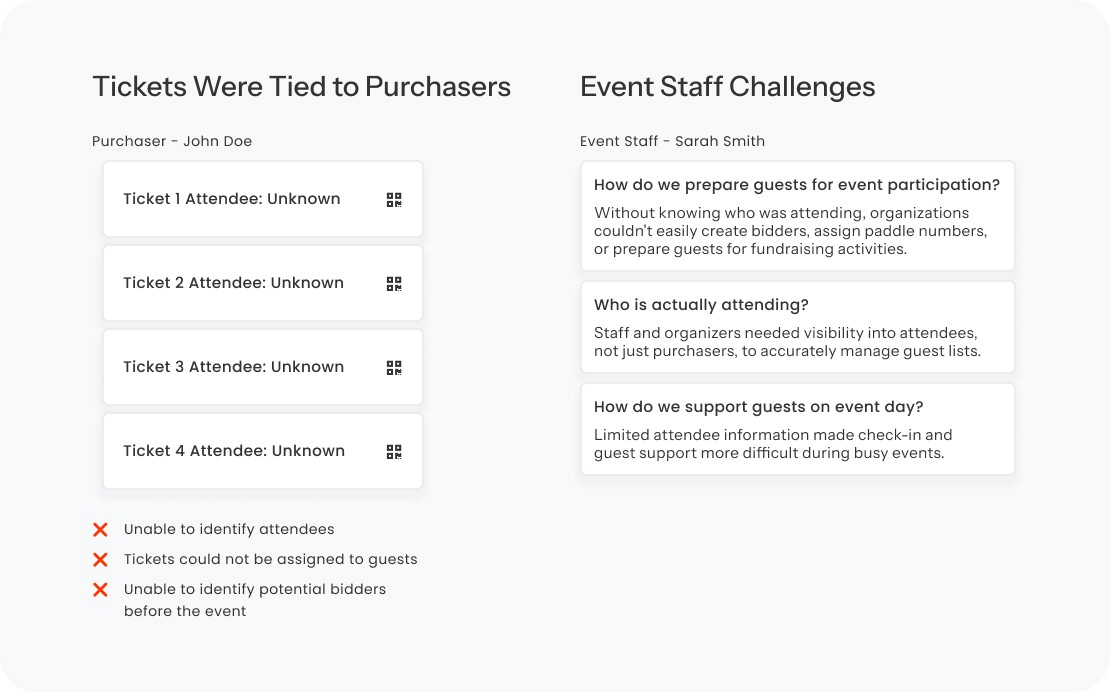
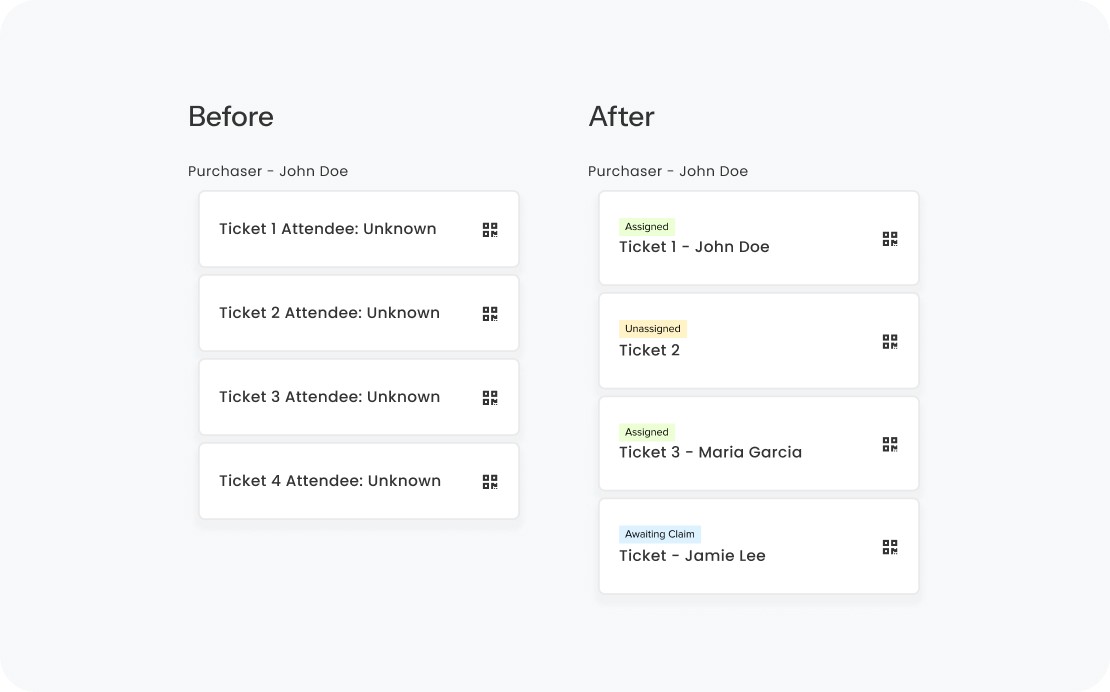
Many fundraising events sell multiple tickets in a single purchase. While the system tracked the purchaser, it didn't provide a clear way to identify the actual attendees associated with each ticket.
This created challenges for event-day staff who needed to quickly understand who was attending, manage guest lists, prepare attendees for fundraising activities, and support guests during check-in.
This became increasingly challenging for galas, auctions, and fundraising events where a single purchaser could manage tickets for multiple attendees.
Goals & Constraints
What I aimed to achieve
Support guest management
Provide a way to associate attendees with tickets and manage guest information before event day.
Streamline event-day operations
Give staff quick access to the information and actions needed during check-in and guest support.
Goals & Constraints
Constraints
Event-day efficiency
Staff needed to perform actions quickly in busy, high-volume event environments.
Multiple event types
The solution needed to work across galas, auctions, fundraising events, and other ticketed experiences.
Design Process
Understanding Fundraising Event Operations
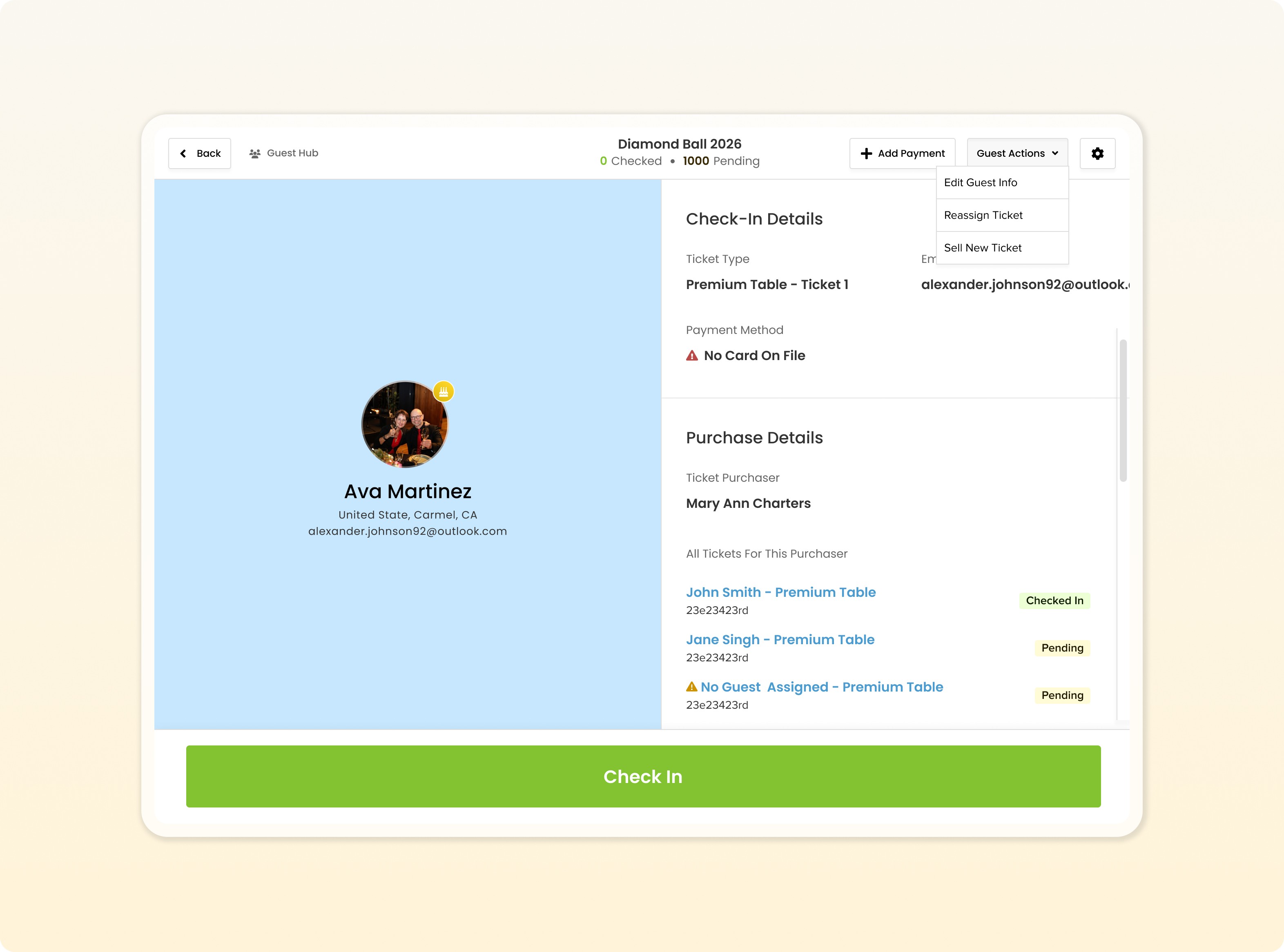
Guest Hub wasn't created from scratch. It evolved from an existing ticketing experience as the company expanded its focus within the fundraising space.
Through conversations with Customer Experience teams, observation of fundraising events, and a deeper understanding of auction and gala workflows, we identified a recurring challenge: organizations needed visibility into attendees, not just ticket purchasers.
As fundraising events became a larger focus, attendee visibility became increasingly important for:
Building guest lists
Preparing bidders before event day
Assigning paddle numbers
Supporting guest check-in and event operations
Identifying the gap between ticketing and fundraising operations
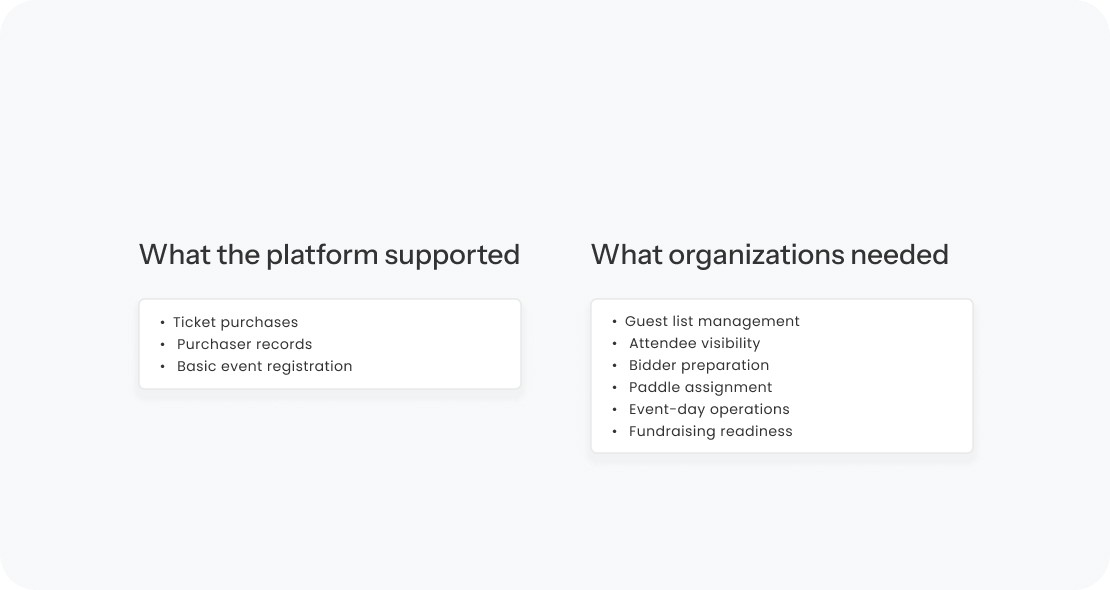
This gap helped define the direction for Guest Hub.
Key Decision 1
Shifting from purchaser-centric to attendee centric workflows
Key Decision 2
Centralizing guest management into a single experience
Outcome & Learnings
From managing tickets to managing attendees
Impact
What I learned
Designing for people, not records
While the platform managed tickets effectively, event staff ultimately needed to manage attendees. Understanding that distinction helped redefine the experience.
Operational tools require clarity above all else
Event-day staff work under time pressure. Clear information architecture and visibility proved more valuable than adding new functionality.
Small workflow changes can unlock larger platform opportunities
Improving attendee visibility created a foundation for guest management, fundraising, and future event experiences.
Guest Hub taught me that event staff aren't managing tickets—they're managing people. By shifting the experience from purchaser-centric records to attendee-centric workflows, we created a foundation for guest management, event-day operations, and future fundraising experiences.This created challenges for event-day staff who needed to quickly understand who was attending, manage guest lists, prepare attendees for fundraising activities, and support guests during check-in.